1.What is Triethylene Glycol (TEG)
Triethylene Glycol (TEG), chemical formula C6H14O4 and CAS No. 112-27-6, is a colorless transparent liquid with strong moisture absorption capability. TEG features a high boiling point, low volatility, and excellent thermal stability, making it one of the most commonly used dehydration agents in the natural gas industry.
Main Features of TEG
l Excellent hygroscopic performance
l High chemical stability
l Low volatility loss
l Low corrosiveness
l Good regeneration capability
l Suitable for continuous industrial operation
l Safe for natural gas processing systems
These characteristics enable TEG to effectively reduce the water dew point of natural gas and improve transportation safety.
2. Main Process of TEG in Natural Gas Dehydration
The main purpose of natural gas dehydration is to remove water vapor from the gas stream to prevent hydrate formation and pipeline corrosion. TEG dehydration is an absorption-based process and is considered one of the most mature technologies in the gas processing industry.
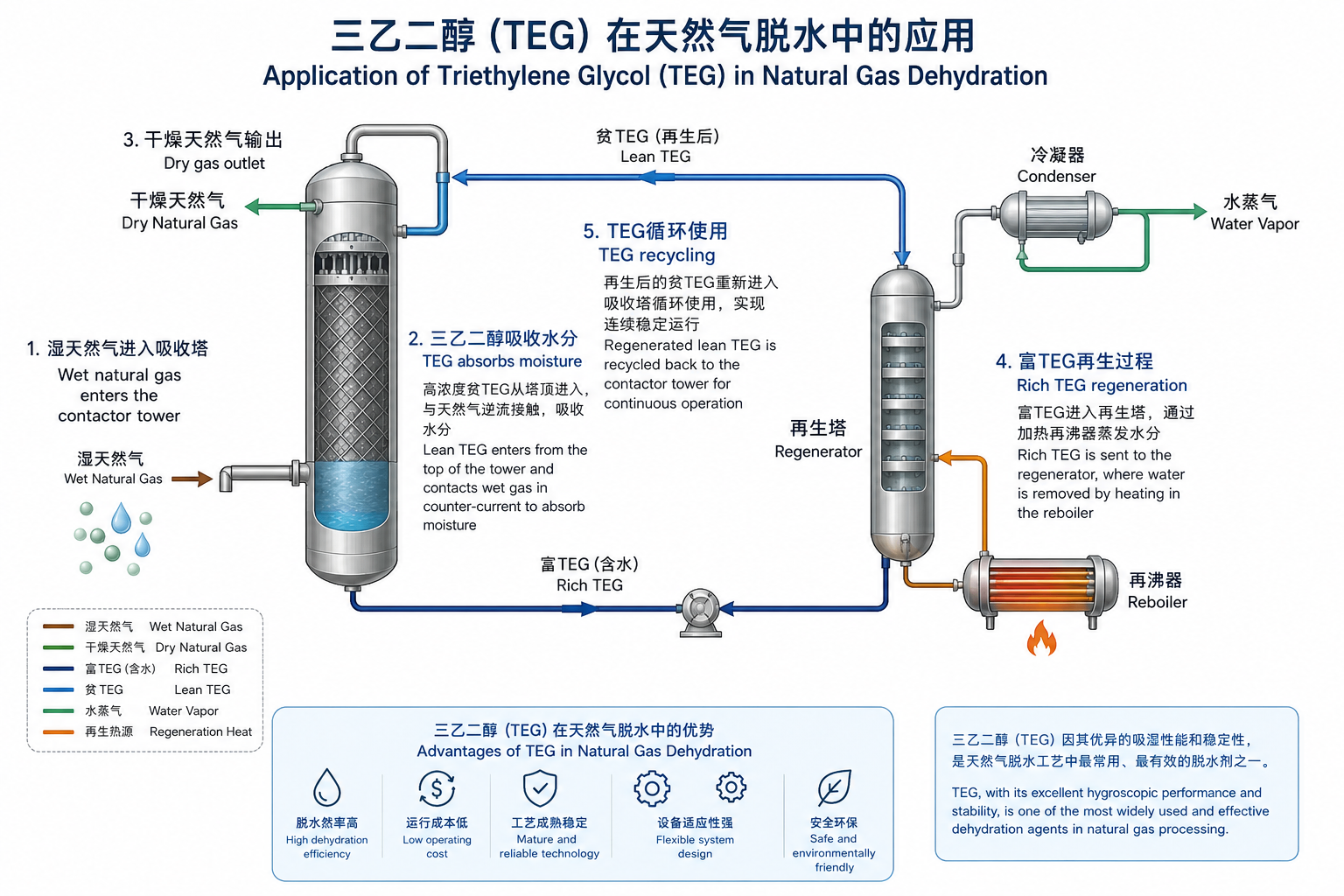
Step 1: Wet Natural Gas Enters the Contactor Tower
Wet natural gas containing water vapor enters the bottom of the contactor tower.
Step 2: TEG Absorbs Moisture
Lean TEG with high concentration enters from the top of the tower and flows counter-currently to the natural gas. Due to its strong hygroscopic ability, TEG absorbs water vapor from the gas stream.
Step 3: Dry Gas Outlet
After dehydration, the dry natural gas reaches the required dew point specification and exits from the top of the tower for further transportation or processing.
Step 4: Rich TEG Regeneration
The water-rich TEG solution is sent to the regeneration unit, where water is removed through heating in a reboiler system.
Step 5: TEG Recycling
The regenerated lean TEG is recycled back into the contactor tower for continuous operation.
3. Advantages of TEG in Natural Gas Dehydration
High Dehydration Efficiency
TEG can significantly reduce water content in natural gas and achieve low water dew points.
Low Operating Cost
TEG can be regenerated and reused continuously, reducing solvent consumption and operational expenses.
Mature and Reliable Technology
TEG dehydration systems are widely applied in gas processing plants, LNG facilities, and oil & gas fields worldwide.
Flexible System Design
TEG dehydration units can be designed for various gas processing capacities and operational requirements.
Environmental and Operational Safety
With low volatility and relatively low toxicity, TEG minimizes emissions and product losses during operation.
Conclusion
As a key dehydration agent in the natural gas industry, Triethylene Glycol plays an essential role due to its excellent moisture absorption capability, stable chemical properties, and mature industrial application. With increasing global demand for natural gas, TEG dehydration technology will continue to be indispensable in gas transportation, LNG processing, and oil & gas development projects.